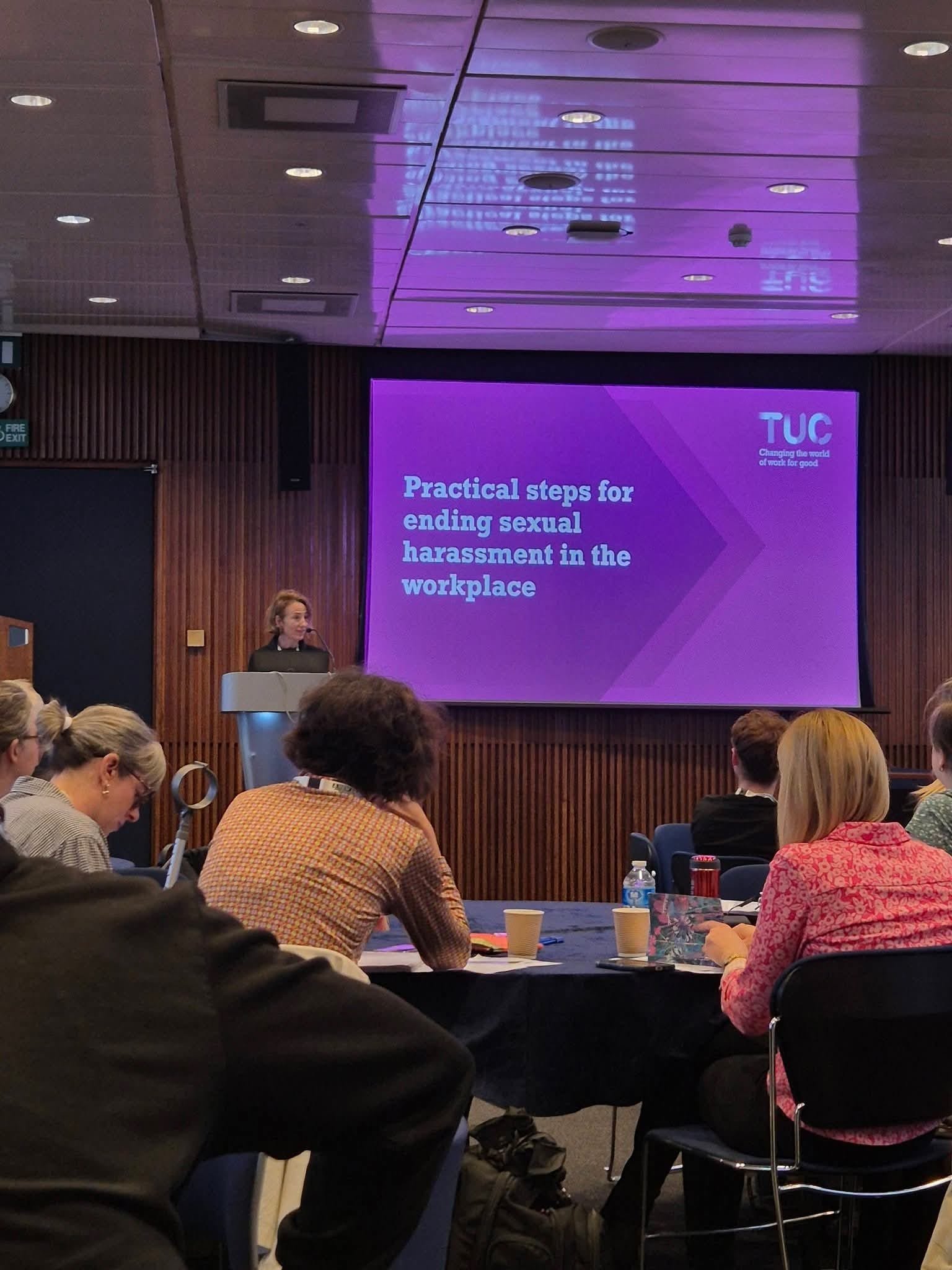
Trade union representatives came together at TUC Congress House in London on 7 October for a day of research, legal discussion and practical training aimed at tackling workplace sexual harassment.
Organised with the support of the TUC, the event brought together researchers, legal experts, campaigners and trade union activists to explore how we move beyond responding to sexual harassment after it happens and start preventing it in the first place.
For the Workers Policy Project and our End Not Defend campaign, this is at the heart of what we are fighting for.
Sexual harassment is not simply an individual grievance or an issue to be dealt with behind closed doors by HR departments. It is a workplace hazard, rooted in unequal power, insecure employment and systems that too often protect employers rather than workers.
Research that exposes the barriers
Dr Ruth Beresford from the University of Warwick and Dr Bob Jeffery from Sheffield Hallam University presented findings from their new research, Ending Workplace Sexual Harassment – Barriers to Reporting, Risk Factors & Implications for Unions.
Their research examined why workers struggle to report harassment and the conditions that leave them particularly vulnerable.
Fear of losing employment, insecure contracts, workplace hierarchies, poor reporting procedures, shame and the normalisation of harassment all create barriers to speaking out.
The research also highlighted the risks associated with lone working, isolated workplaces and jobs where customers or senior managers hold significant power over workers.
It reinforced an important message. We cannot expect workers to challenge harassment safely while leaving the structures that expose them to harm untouched.
The researchers also highlighted the importance of trauma-informed trade union representation, trusted reporting systems and collective action.
Understanding the law and challenging employers
Ranjit O’Mahony from Morrish Solicitors examined the legal protections available to workers and the changes introduced through the Employment Rights Act 2025.
Her session provided practical guidance for representatives on challenging employers, examining workplace policies, recording failures, identifying victimisation and demanding effective preventative measures.
But legislation alone will not change workplace cultures.
Rights are only meaningful when workers understand them, unions organise around them and employers are held accountable.
Giving representatives practical tools
The day also included practical group exercises involving Janet Newsham, whose decades of experience in trade union health and safety education have been invaluable to End Not Defend, and Irena Do Carmo from Unite the union, who has worked on the Get Me Home Safely campaign.
The sessions connected workplace sexual harassment with wider questions of safety, employer responsibility and the practical steps representatives can take.
Attendees received risk assessment materials, a workplace checklist and an End Not Defend toolkit to help them take these discussions back into their workplaces.
The aim was not simply to raise awareness. It was to give representatives the confidence and tools to organise for change.
The discussion was the beginning
The event followed the End Not Defend and #McStrike protest outside McDonald’s UK headquarters on 6 October.
Together, these activities underline our determination to take this campaign from public protest into workplaces, union branches and the wider political debate.
We want sexual harassment recognised and regulated as a workplace health and safety issue, with stronger preventative duties, safe reporting mechanisms, meaningful enforcement and greater public accountability.
We are grateful to the TUC for supporting the event, to every contributor who shared their knowledge and experience, and to the representatives who took part.
Now we want to hear from you.
Whether you attended the event or want to get involved for the first time, End Not Defend needs workers, trade union representatives and branches prepared to challenge unsafe workplaces and demand change.
Those who attended can complete our short online feedback questionnaire and express interest in further campaign activity.
Others can find out more and access campaign materials through the End Not Defend website and resource page.
Recognise the risk. Prevent the harm. Protect workers.
End Not Defend.