Foundations, Exposure, and Collective Direction
“End Not Defend was chosen as our first campaign because it exposes, more clearly than almost any other issue, how power operates at work and how enforcement fails when institutions are allowed to protect themselves.”
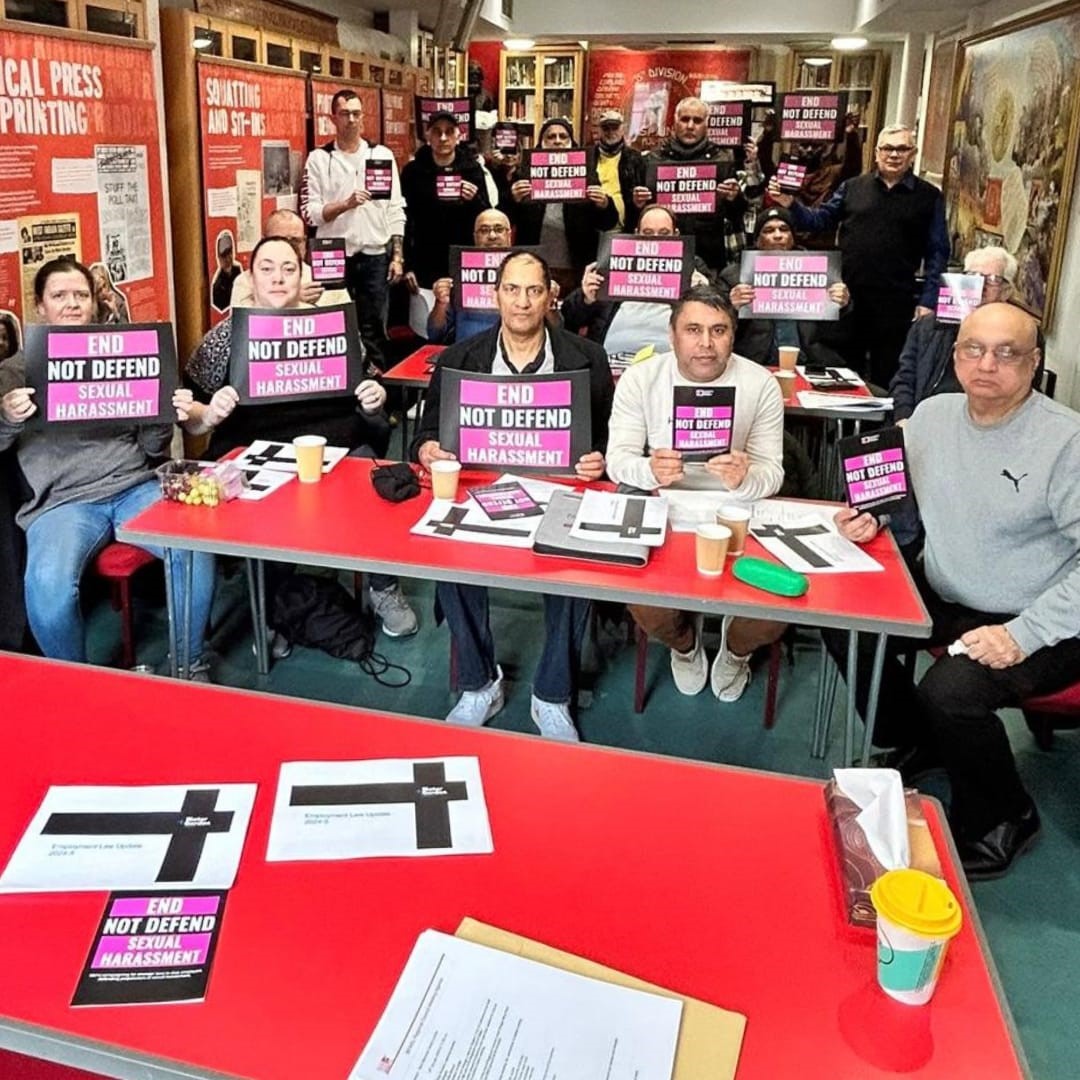
Year One marked the launch of the Workers Policy Project and the start of its first campaign, End Not Defend. This first year was about setting direction. The decision to begin with End Not Defend was deliberate. Workplace sexual harassment exposes, in its clearest form, how power, risk, and accountability are misaligned at work. Starting here signalled what the Workers Policy Project exists to do: focus on enforcement rather than statements, systems rather than individuals, and collective power rather than individual endurance.
What We Did in Year One
- Set a clear enforcement frame
We reframed workplace sexual harassment as a health and safety issue, not an HR problem, shifting the focus from individual complaints to employer responsibility and prevention. The UK already recognises workplace violence, aggression, stress and harassment as health and safety hazards requiring HSE oversight. Sexual harassment is the exception, despite causing identical documented harm and affecting 1 in 3 workers annually. This approach is already established across the EU and in countries like France and Sweden, where sexual harassment sits alongside physical hazards as something employers must actively prevent through documented risk assessments and control measures.
Through End Not Defend, we developed evidence-based proposals for making sexual harassment a health and safety issue regulated by the HSE, with the same enforcement mechanisms used for other workplace hazards: mandatory risk assessments, rights of inspection, and improvement notices. We produced joint briefings with partner organisations including Rights of Women and the Suzy Lamplugh Trust, setting out how this regulatory shift would work in practice and why it matters for workers in precarious employment who are 60% more likely to be harassed.
“Awareness does not prevent harm. Enforcement does.”
- Centred lived experience safely
We created routes for anonymised worker testimony to inform policy and campaigning, ensuring workers’ experiences shaped the work without placing individuals at risk. This included working closely with migrant workers through our partnership with India Labour Solidarity, whose young member sits on our advisory board, and developing relationships with workers in hospitality and retail sectors where harassment rates are highest and wages lowest.
The testimony we gathered showed clearly that reporting felt like a risk, not a protection. Workers described fearing job loss, visa insecurity, and career damage more than they trusted existing complaint procedures. This evidence directly shaped our policy proposals, particularly around safer reporting routes and external oversight that doesn’t rely on workers taking personal risk to challenge their employers.
“Reporting felt like a risk, not a protection. What we needed wasn’t another policy — it was a system that acted before harm happened.”
- Built a wide coalition
Over the year, we brought together trade unions and workplace organisers, community organisations, legal professionals and advice services, campaigners, academics, policy specialists, and elected representatives. This coalition reflects a shared understanding: when enforcement fails at work, the consequences are felt far beyond the workplace.
We developed working relationships with major trade unions including Unite and the TUC. We partnered with specialist organisations including Rights of Women and the Suzy Lamplugh Trust, bringing together legal expertise with frontline support services. We worked with London-based migrant rights organisations India Labour Solidarity and Regularise, ensuring our work centred the experiences of workers facing compounding vulnerabilities through visa insecurity, language barriers, and precarious employment.
This coalition enabled us to produce joint briefings for parliamentarians, combining worker testimony, legal analysis, and practical policy proposals. We worked cross-party in both the Commons and Lords, building relationships with MPs and peers who champion workers’ rights and gender equality. These joint briefings positioned End Not Defend as a serious policy intervention backed by substantial evidence and broad-based support.
“Workplace harm doesn’t stop at the workplace. It affects health, families, and communities — which is why this work has brought together unions, community groups, legal experts, and policymakers.”
- Developed practical, preventative policy
We advanced clear, enforceable proposals focused on proactive duties, external oversight, safer reporting routes, transparency, and realistic timeframes. These weren’t abstract principles. We tested ideas with workers, union representatives, health and safety specialists, and legal experts to ensure they would be workable in practice, not symbolic.
Our proposals set out exactly how HSE regulation would work for sexual harassment: what mandatory risk assessments would cover, how inspection rights would operate, what improvement notices would require, and how this would integrate with existing health and safety frameworks. We worked with former health and safety inspectors and workplace organisers to develop guidance that would be genuinely useful to workers and their representatives, translating complex regulation into practical tools.
“The problem is not a lack of law. It is the lack of enforcement, and systems that rely on individuals taking personal risk will always fail the most vulnerable workers.”
- Laid foundations for future campaigns
End Not Defend established a model for how the Workers Policy Project will operate: worker-led evidence, systemic analysis, coalition-building, and a focus on enforcement. The relationships built through this campaign, the joint briefings developed, and the parliamentary engagement achieved all created infrastructure that future campaigns can build on.
We demonstrated that it’s possible to centre lived experience while maintaining worker safety, to build broad coalitions without losing focus on enforcement, and to develop policy that is both ambitious and practical. The model we established through End Not Defend—combining grassroots organising with parliamentary advocacy, worker testimony with legal expertise, immediate support with systemic change—will shape how we approach future campaigns on other enforcement failures at work.
Looking Beyond the UK
As Year One progressed, we also began developing international links. The failures exposed by End Not Defend are not unique to the UK, and building shared learning and solidarity across borders is a key part of the work ahead. We connected with worker organisations and health and safety campaigners in France, Sweden, and across the EU, learning from countries where sexual harassment is already regulated as a health and safety issue and sharing our analysis of how enforcement frameworks succeed or fail in practice.
“The failures exposed by End Not Defend are not unique to the UK. Power operates across borders, and accountability must increasingly do the same.”
What Year One Showed
Year One proved several things clearly. Awareness alone does not prevent harm – every workplace that has experienced high-profile harassment cases had awareness policies in place. Self-regulation leaves workers carrying the risk—voluntary measures consistently fail to protect those in the most precarious positions. Collective organisation is essential to make rights real – individual complaints cannot challenge systemic failures, but organised workers, supported by broad coalitions and backed by enforceable regulation, can shift power at work.
The campaign achieved tangible progress. We submitted amendments to the Employment Rights Bill working cross-party in both the Commons and Lords. We produced joint briefings that positioned sexual harassment as a health and safety issue for the first time in parliamentary debate. We built a coalition spanning unions, migrant rights organisations, women’s organisations, and legal specialists that will continue to drive this work forward. We created routes for worker testimony to shape policy safely. We developed practical proposals that could be implemented through existing regulatory frameworks.
Most importantly, we demonstrated that it’s possible to run campaigns that genuinely centre lived experience, build collective power, and achieve concrete policy progress—all at once. Year One was about proving that a different model of campaigning is possible, one that doesn’t ask individual workers to carry risk, that builds coalitions across unusual allies, and that focuses relentlessly on enforcement rather than statements.
“Year One was about foundations. The years ahead will be about organisation, enforcement, and making rights real.”